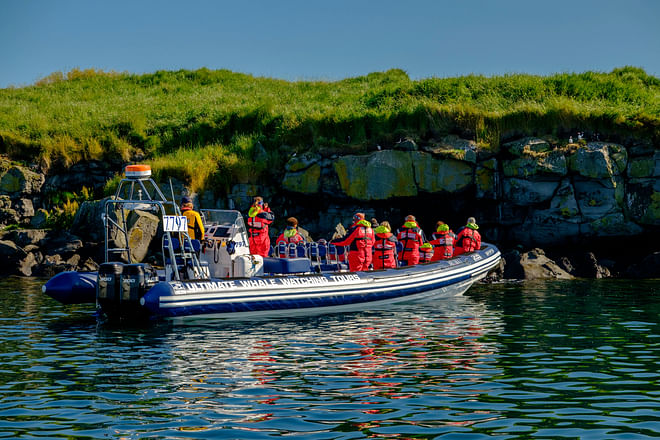
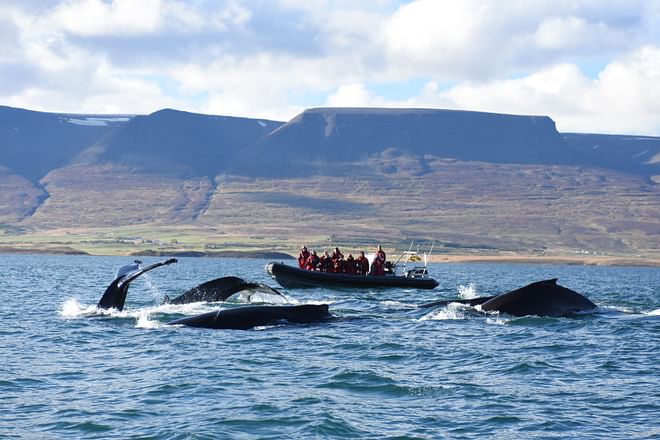
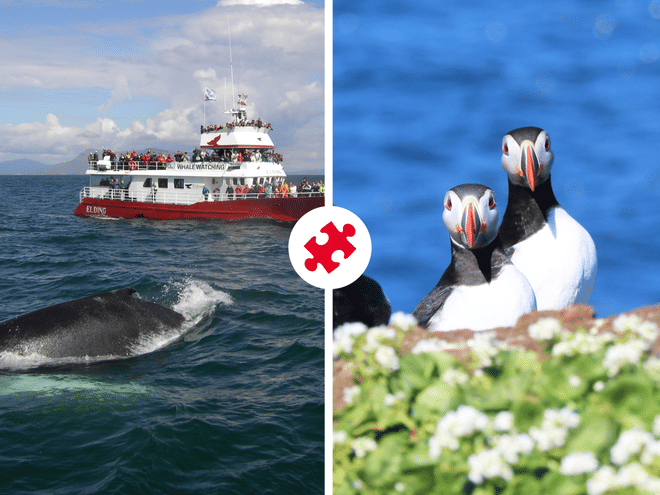
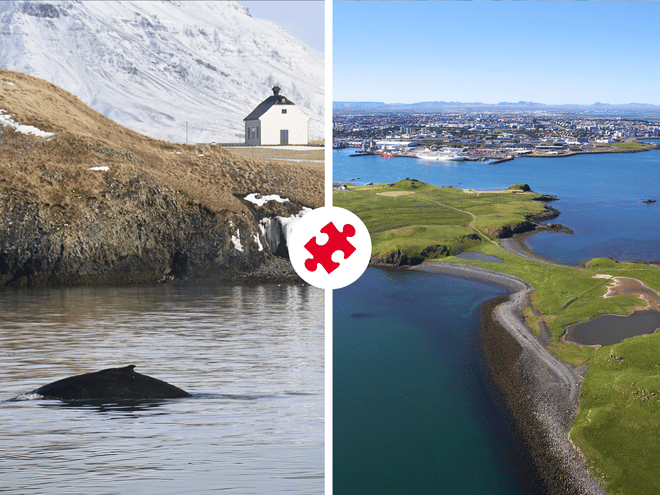
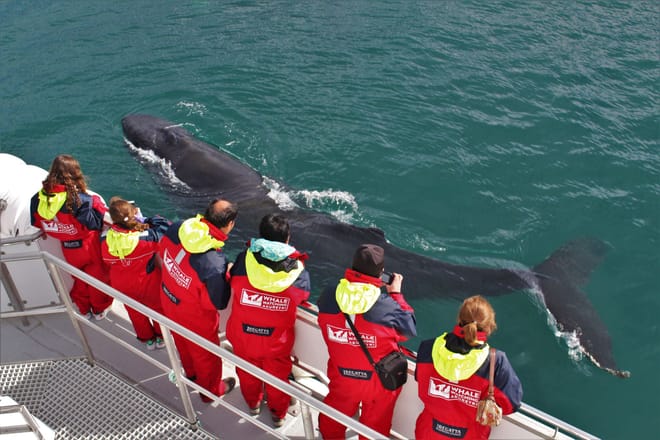
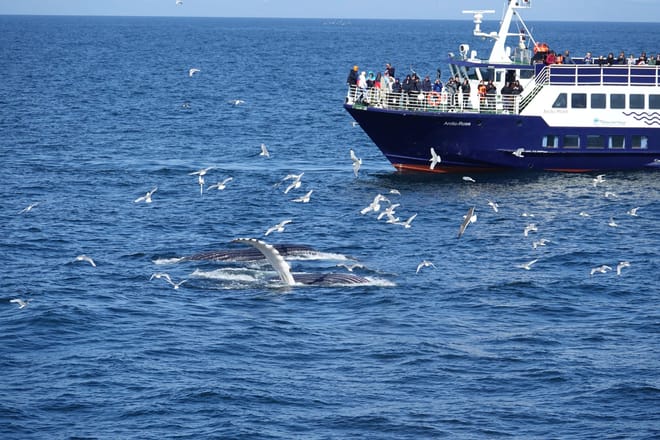
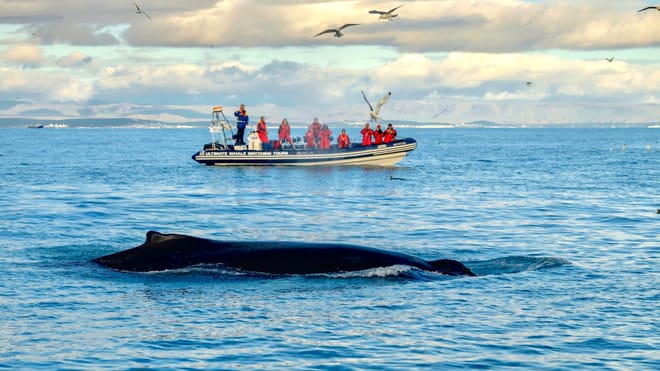
The cold, nutrient-rich waters around Iceland attract more than 20 species of whales and dolphins. Combined with tens of thousands of nesting seabirds – including the much-loved Atlantic puffin – a boat trip is one of the best wildlife experiences in Europe.
Which whales can you see?
- Humpback whales – famous for their acrobatics, tail flukes and breaching. Seen especially in the north and increasingly in Faxaflói bay near Reykjavík.
- Minke whales – the most commonly sighted whale around Iceland.
- White-beaked dolphins and harbour porpoises – frequent companions on tours.
- Blue whales – the largest animal on Earth, occasionally seen in early summer, especially from Húsavík.
- Orcas – sometimes seen, particularly off Snæfellsnes and in winter in some fjords.
Sightings can never be guaranteed, but many operators offer a free second trip if you see no whales.
Where to go whale watching
Reykjavík
Tours leave from the Old Harbour, just a short walk from the city centre, all year round. Trips last about 3 hours in Faxaflói bay. Convenient if you are based in Reykjavík; in summer, many tours combine whales and puffins.
Húsavík – Iceland's whale capital
On the north coast, Húsavík overlooks Skjálfandi bay, known for very high sighting rates in summer, including humpbacks and occasionally blue whales. Choose between traditional oak boats and fast RIB speedboats. Húsavík also has an excellent whale museum.
Akureyri and Eyjafjörður
The long fjord north of Akureyri is sheltered, so trips are often calmer. Humpbacks are regularly seen here, sometimes even in winter.
When is the best time?
- April–October is the main whale season, with June to August offering the calmest seas and the most species.
- Winter trips run from Reykjavík and Akureyri; sightings are fewer and the sea rougher, but the light and the lack of crowds can be magical.
Puffins
Atlantic puffins nest in Iceland from roughly May to mid-August. Good places to see them:
- Puffin islands off Reykjavík (Akurey and Lundey) on a short boat trip.
- Dyrhólaey and Reynisfjara on the South Coast.
- Vestmannaeyjar (Westman Islands) – home to one of the largest puffin colonies in the world.
- Látrabjarg in the Westfjords and Borgarfjörður eystri in the east, where you can watch them up close from viewing platforms.
Practical tips
- It is always colder at sea. Operators provide warm overalls, but bring a hat, gloves and layers.
- If you get seasick easily, take medication before departure, choose a larger boat and stay outside in the fresh air.
- Bring binoculars and a camera with a zoom lens.
- Morning tours often have calmer seas.
Frequently asked questions
What is the best month for whale watching in Iceland?
June, July and August usually give the best conditions and the most species, but whale watching is possible all year from Reykjavík and Akureyri.
Where is the best place for whale watching in Iceland?
Húsavík in North Iceland is often called the whale-watching capital, with excellent summer sightings. Reykjavík is the most convenient, with tours all year from the Old Harbour.
When can I see puffins in Iceland?
Puffins nest in Iceland from about May to mid-August. Short puffin boat tours leave from Reykjavík in that period.
What if I don't see any whales?
Many operators offer a free second trip if no whales are seen. Check the specific conditions when booking.
Last updated 2026-10-13