Seeing the aurora borealis dance across a dark Icelandic sky is the dream that brings many people to Iceland in winter. The good news: Iceland sits right under the auroral oval, so the lights can appear almost anywhere in the country. The honest news: they are a natural phenomenon, and you need dark skies, clear weather and solar activity to line up. This guide explains how to give yourself the best possible chance.
When is the Northern Lights season?
The aurora is present all year, but you can only see it when the sky is dark. In Iceland that means from about late August to mid-April. In June and July the midnight sun makes it impossible.
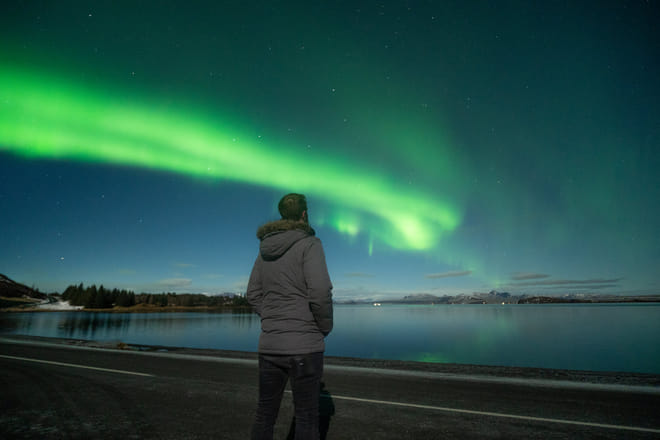
- September–October: mild temperatures, dark nights returning, and lakes that are not yet frozen – reflections of the aurora in still water are spectacular.
- November–February: the longest nights (up to 19–20 hours of darkness in December), so the most hours of opportunity – but also more storms and cloud.
- March: longer days but still dark evenings, often more stable weather. The weeks around the equinoxes are often said to bring more geomagnetic activity.
The lights are usually strongest between about 21:00 and 02:00, but they can appear as soon as it is fully dark.
What you need for a good sighting
- Darkness. Get away from city lights. Even Reykjavík can show strong auroras, but the experience is far better a short drive outside town.
- Clear skies. Cloud cover is the biggest enemy – far more often than lack of solar activity. Check the cloud forecast from the Icelandic Met Office (vedur.is), which has a dedicated aurora page.
- Solar activity. The Kp index (0–9) describes geomagnetic activity. In Iceland even Kp 2–3 can give a beautiful display if the sky is clear and dark.
- Patience. Auroras come in waves. A quiet sky can explode into colour twenty minutes later.
Tour or on your own?
You can absolutely hunt the lights yourself with a rental car, but winter driving in the dark on icy roads is demanding if you are not used to it. A guided tour has real advantages:
- Guides check cloud maps and forecasts every evening and drive to wherever the sky is clearest – sometimes an hour or more away.
- You can relax, take photos and enjoy hot chocolate instead of focusing on the road.
- Most operators offer a free rebooking if you do not see the lights. Check the conditions before you book – it is a valuable guarantee.
Types of aurora tours
| Tour type | Good for | Typical length |
|---|---|---|
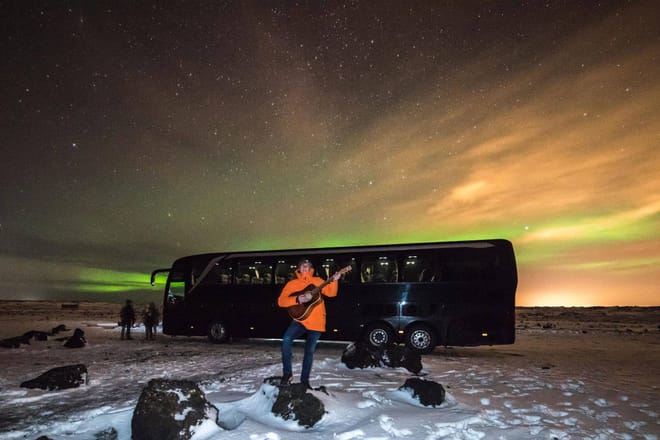
| Bus tour | Best value, larger groups | 3–5 hours |
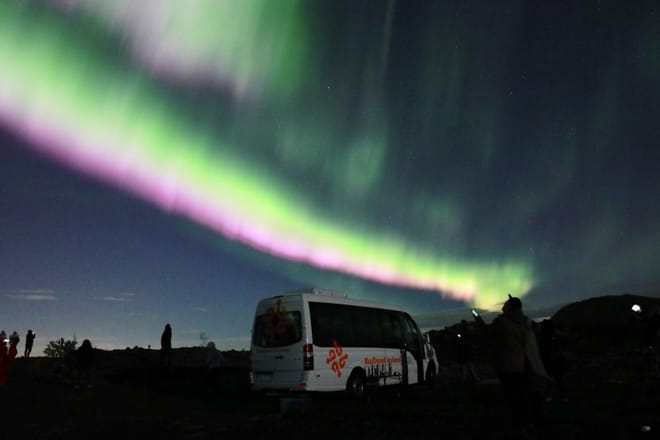
| Minibus / small group | More flexibility, quieter spots | 3–5 hours |
| Super jeep | Remote locations, rough roads | 4–6 hours |
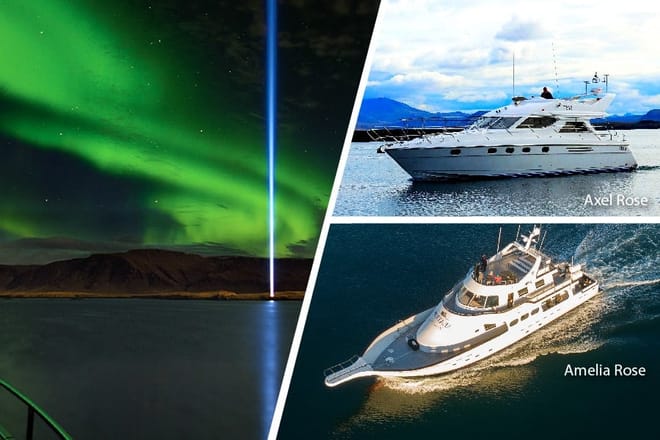
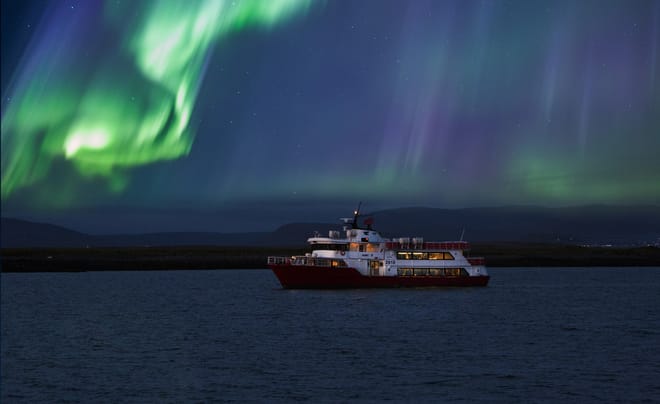
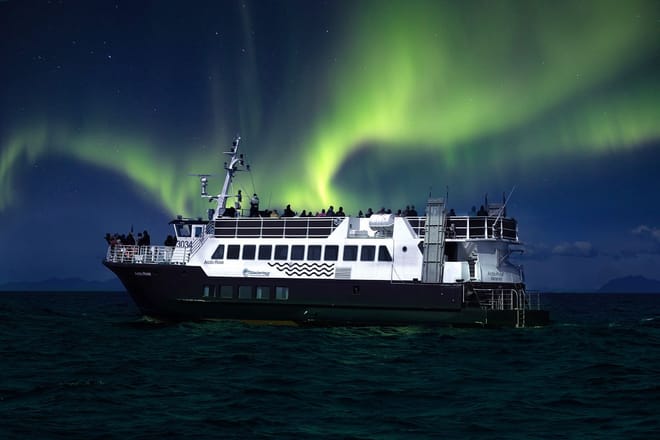
| Boat tour from Reykjavík | Short trip, city lights behind you | 2–3 hours |
| Multi-day tours | Several nights = several chances | 2–6 days |
Our tip: book your aurora tour for early in your trip. If it is cancelled because of weather, or you see nothing, you still have time to use the free retry.
Where to see the Northern Lights in Iceland
- Near Reykjavík: Þingvellir National Park, the Reykjanes peninsula and the Grótta lighthouse are easy to reach.
- South Iceland: the South Coast and the Jökulsárlón glacier lagoon offer dark skies with dramatic foregrounds.
- North Iceland: the Akureyri and Mývatn area is often drier than the south, which can mean clearer skies.
- Snæfellsnes: Kirkjufell mountain under the aurora is one of the most photographed scenes in Iceland.
What to wear
It is often windy, and you will stand still for long periods. Dress in layers:
- Thermal base layer (wool is best), a warm fleece or down mid-layer and a windproof outer shell.
- Warm hat, gloves (plus thin liner gloves for using your camera), scarf or buff.
- Insulated winter boots and wool socks – cold feet end more aurora nights than anything else.
- Microspikes or ice cleats can be useful in icy conditions.
How to photograph the aurora
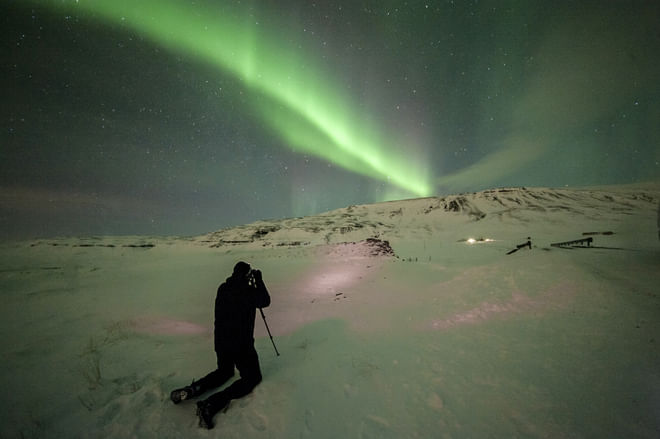
Phones have become surprisingly good: use night mode and hold the phone very still or lean it against something. With a camera:
- Use a tripod and a wide-angle lens with a large aperture (f/2.8 or wider).
- Start at ISO 1600–3200 and an exposure of 5–15 seconds; shorter if the lights move fast.
- Focus manually on a bright star or a distant light, and turn off the flash.
- Bring a spare battery and keep it warm in an inside pocket – the cold drains batteries quickly.
Frequently asked questions
What is the best month to see the Northern Lights in Iceland?
There is no single best month. The season runs from late August to mid-April. December and January have the most hours of darkness, while September, October and March often combine darkness with milder weather. Clear skies matter more than the month.
Can you see the Northern Lights from Reykjavík?
Yes, during strong displays you can see them from the city, especially from darker spots like Grótta lighthouse. For the best experience, drive 20–40 minutes away from the city lights.
What happens if I see no Northern Lights on my tour?
Many Icelandic operators offer a free retry on another night if there is no aurora activity during the tour. The exact conditions differ between operators, so check them before booking.
What Kp index do I need in Iceland?
Because Iceland is located under the auroral oval, even a Kp of 2–3 can produce a visible display. Cloud cover is usually a bigger factor than the Kp value.
Last updated 2026-10-13